Practice

Practice

Infection Prevention Webinar Series

Thank You for Joining Our Infection Prevention Webinar Series A huge thank you to everyone who joined us for the Dental Innovations Infection Prevention Webinar Series over the past four weeks. It was fantastic to see so many practice owners, dentists, hygienists, therapists, dental assistants and practice managers taking time out of their busy schedules to strengthen their knowledge and reinforce best practice in infection prevention. We would also like to extend our sincere thanks to Dentavision for supporting this educational series, and to Jasmine No from MUN for sharing her expertise. Jasmine delivered practical, engaging sessions filled with real-world advice that practices can confidently implement every day. Why Infection Prevention Matters Infection prevention underpins every aspect of dental care. It protects patients, safeguards dental teams, supports compliance with current standards and helps build trust with every person who walks through the practice door. While many protocols become routine, taking the time to revisit the fundamentals ensures the whole team remains confident, consistent and up to date. Throughout the series, we explored four essential areas of infection prevention. Hand Hygiene – The Foundation of Safe Patient Care Hand hygiene is one of the simplest yet most effective ways to prevent the spread of infection. This session highlighted the critical moments for hand hygiene, common compliance challenges and practical strategies to improve consistency throughout the practice. It served as an important reminder that small habits have a significant impact on patient and staff safety. Session 1 Recording: Hand Hygiene Sharps Safety – Reducing Risk Every Day Sharps injuries remain one of the most common occupational hazards in dentistry. Jasmine shared practical guidance on safer handling techniques, correct disposal procedures and ways to minimise the risk of needlestick injuries. The session reinforced the importance of creating a culture where prevention, awareness and safe work practices are part of every clinical procedure. Session 2 Recording: Sharps Safety Personal Protective Equipment (PPE) – Protecting Patients and Your Team Choosing the right PPE is only part of the equation. This webinar explored when different types of PPE should be used, correct donning and doffing techniques, and common mistakes that can compromise protection. Attendees gained valuable reminders on how appropriate PPE supports both infection prevention and regulatory compliance. Session 3 Recording: PPE Use & Best Practice Aseptic Technique – Protecting the Sterile Field This session focused on the principles of aseptic technique and the importance of maintaining sterility throughout clinical procedures. From preparing instruments and materials to reducing the risk of contamination during treatment, Jasmine shared practical tips to help practices strengthen their clinical protocols and deliver safe, high-quality patient care. Session 4 Recording: Aseptic Techniques Help Shape Our Future Webinars At Dental Innovations, we’re committed to providing practical education that supports independent dental practices. We’d love to hear from you: What topics would you like us to cover next? Are there any clinical, compliance, business or practice management challenges you’d like to learn more about? Is there a speaker you know or you’ve seen at a conference or industry event who you’d love us to invite? If so, what topics do they cover? Your feedback helps us develop webinar programs that are relevant, practical and valuable for the entire dental team. Thank you once again to everyone who attended, and a special thank you to Dentavision for their support and Jasmine No from MUN for sharing her knowledge and passion throughout the series. We look forward to bringing you more educational opportunities soon.

Business, Practice

Communication Is Key

We Don’t Have a Communication Problem. We Have a Conversation Problem. Amy Morgan – Director | Editor – The Rise Dental Co The biggest misunderstandings in a dental practice rarely come from what people say. They come from the stories we create about things that were never said. Imagine asking everyone in your practice the same question: “How would you describe the culture here?” Chances are that you’d hear five very different answers. The practice owner might proudly tell you they’ve worked hard to build a supportive team. A dental assistant may quietly wonder whether anyone notices just how much happens behind the scenes to keep the day running smoothly. Reception might describe the emotional balancing act of calming anxious patients while juggling phones, schedules and unexpected changes. Meanwhile, the hygienist could describe feeling that their concerns are sometimes heard only after an issue has already occurred. What’s fascinating is that they’re all describing the very same workplace, yet each person’s experience feels completely different. That doesn’t mean anyone is wrong, it simply means we’re all experiencing the same environment through different lenses, shaped by our role, our experiences and the meaning we’ve attached to them. After working alongside dental teams across Australia, I’ve come to believe something that surprises a lot of people. Most practices don’t actually have a communication problem; they have a conversation problem. Whether we realise it or not, we all arrive at work carrying stories. That’s not because we’re dramatic or negative, but because it’s how our brains make sense of the world. Every interaction, email, passing comment, meeting and even silence is filtered through our own experiences and assumptions. Sometimes they sound like this: The dentist doesn’t trust us. Reception has no idea what it’s like in surgery. People in surgery don’t understand what happens at reception. Management only notices mistakes. No matter what I do, it’ll never be enough. At first, these are simply interpretations. They’re our best attempt at making sense of a moment. But over time, something subtle happens, those interpretations begin to feel like facts. Once we’ve written a story about someone in our mind, our brains naturally start looking for evidence to support it. We notice the interactions that confirm what we already believe while overlooking anything that challenges it. Psychologists call this confirmation bias. The difficulty is that while our stories often feel true, they’re rarely the whole truth. Dental practices are incredibly good at exchanging information. A patient has arrived. Lab work is back. Room three is ready. The crown needs adjusting. The stock has been delivered. The schedule has changed. Information moves constantly because it has to, it’s what keeps the day functioning. But information isn’t the same as conversation. Every conversation we avoid leaves space for our imagination to step in. Because our brains are wired to make sense of uncertainty, our brains are uncomfortable with missing information. When there are gaps in the story, we instinctively fill them. I often remind teams that people don’t respond to what actually happened, they respond to the meaning they’ve attached to what happened. That distinction changes one’s perspective immediately. Two people can experience exactly the same interaction and leave with completely different conclusions. Neither is trying to create conflict. They’re simply interpreting events through different experiences, pressures and expectations. A few months ago, I was working with a dental practice that described themselves as ‘struggling with communication.’ As we explored what was happening, something interesting emerged. The principal believed the team had become disengaged. They weren’t contributing ideas in meetings, they weren’t asking questions, and there seemed to be little ownership around improving the practice. The team’s perspective was completely different. They believed decisions had already been made before meetings began, so they stopped offering ideas because they assumed their input wouldn’t change anything. Neither side was trying to create distance. Neither side intended to make the other feel unheard. Both sides were responding to a story they had created. The principal’s story was: My team isn’t invested. The team’s story was: Our opinions don’t matter. The breakthrough didn’t come from a new communication strategy or another team meeting. It came from one honest conversation where both sides realised they had been reacting to assumptions rather than reality. The story they’d each carried for weeks disappeared in a two-minute conversation. Nothing about the situation had changed, only each side’s understanding of it. Sometimes the conversation we’re avoiding isn’t difficult because of what will be said. It’s difficult because of what we’ve already decided is true. So, perhaps instead of asking, how do we communicate better? We should be asking, what conversations are we avoiding? That single question shifts the focus from communication as a skill to conversation as a choice. Because the answer is rarely another meeting, another policy or another personality profile. More often it’s about the courage to ask instead of assuming, and to acknowledge when we’ve misunderstood a situation. The next time you find yourself feeling frustrated, disappointed or hurt by something that has happened at work, resist the temptation to immediately believe the first story your mind creates. Instead, pause and ask yourself three simple questions: What do I know for certain? Separate the facts from your interpretation. What have I assumed? Notice where you’ve filled in the gaps without checking whether your conclusions are true. Who do I need to ask? If the story involves another person, the only way to know the truth is to have the conversation. These questions take less than a minute; they won’t eliminate misunderstandings altogether, but they can change the meaning we’ve attached to situations and stop a false story from becoming a damaged relationship. Every person in your practice is carrying a story. Some of those stories build trust, connection and belonging. Others quietly create distance, misunderstanding and resentment. Sometimes the smallest shift in perspective opens the door to the biggest change in a workplace. The difference is found in the willingness to have one honest conversation
Practice

Is Your Practice 3D Printing Safely?

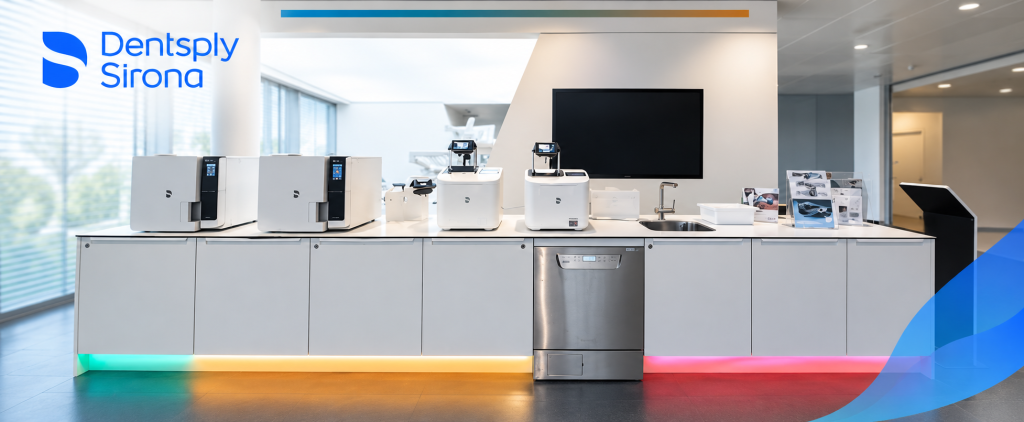
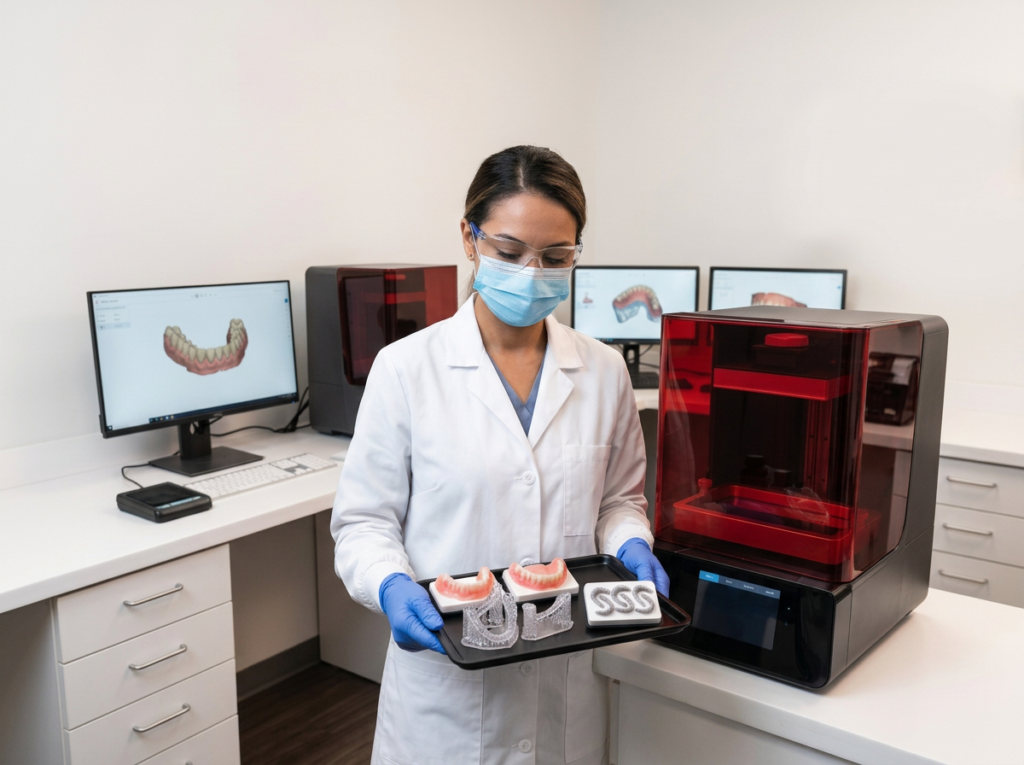
3D Printing In-House: What Dental Teams Need to Know About Staff Safety Insights from Professor Laurie Walsh A huge thank you to Professor Laurie Walsh for joining Dental Innovations for our recent webinar, “3D Printing In-House: A Primer for Dental Staff Safety.” Professor Walsh brought his extensive knowledge and experience to an increasingly important topic for dental practices. As more practices bring 3D printing in-house to produce surgical guides, models, splints and temporary restorations, understanding the potential workplace risks is just as important as understanding the benefits. If you missed the webinar, we strongly encourage you to watch the recording. Professor Walsh provides practical, evidence-based guidance on identifying hazards, reducing staff exposure and creating safer 3D printing workflows within the dental practice. 3D Printing In-House: A Primer for Dental Staff SafetyPresented by Professor Laurie WalshProudly supported by Dentsply Sirona WATCH THE WEBINAR RECORDING Ventilation Matters More Than You Think One of the key messages from Professor Walsh’s presentation was the importance of controlling exposure at the source. 3D printing can release volatile organic compounds (VOCs) and ultrafine particles (UFPs), particularly during printing and post-processing. In poorly ventilated environments, these contaminants can accumulate and increase potential exposure for staff. Good room ventilation, local exhaust systems and enclosed printing solutions can all help minimise exposure and create a safer working environment. Learn more:Safe Work Australia – Airborne contaminants and workplace controls PPE Is Important – But It’s the Last Line of Defence Another important takeaway was the need to look beyond personal protective equipment. Gloves, masks and eye protection have an important role to play, particularly when handling uncured resin or during cleaning and post-processing. However, PPE sits at the bottom of the Hierarchy of Controls. Where possible, practices should first look at ways to eliminate or reduce the hazard through engineering and environmental controls. This might include enclosed printing, washing and curing systems, effective ventilation and local exhaust. For tasks where exposure remains possible, appropriate nitrile gloves, eye protection and respiratory protection should be selected and used correctly. Learn more:Safe Work Australia – Managing WHS Risks Don’t Overlook Post-Processing The printer itself isn’t the only consideration. Professor Walsh highlighted the importance of looking at the entire 3D printing workflow, including washing, curing, cleaning and handling. Isopropyl alcohol (IPA), commonly used during cleaning and post-processing, can produce vapours that may cause irritation, headaches, dizziness and drowsiness when exposure isn’t adequately controlled. Enclosed washing systems, appropriate ventilation and correct storage can help reduce potential exposure. Small Changes Can Make a Big Difference Some of the practical steps practices can consider include: Position printers away from staff workstations where possible. Ensure adequate air exchange or local exhaust ventilation. Use enclosed washing and curing systems where possible. Wear appropriate nitrile gloves when handling uncured resins. Review the Safety Data Sheets (SDS) for all printing materials and chemicals. Ensure materials are stored correctly. Train everyone involved in the workflow, not just the person operating the printer. Review the complete printing and post-processing workflow regularly. Continuing to Support Independent Practices At Dental Innovations, our webinars are designed to give independent dental practices access to practical, evidence-based information that can help teams stay informed, safe and prepared for the future. The growth of in-house 3D printing presents exciting opportunities for dental practices, but as Professor Walsh demonstrated, those opportunities need to be balanced with a clear understanding of workplace safety. Thank you again to Professor Laurie Walsh for sharing his expertise with our members, and to Dentsply Sirona for supporting this valuable educational session. Missed the webinar? Take 30 minutes to hear directly from Professor Laurie Walsh and learn what your practice should consider when introducing or expanding in-house 3D printing. WATCH THE FULL WEBINAR RECORDING

Practice

MEET A MEMBER: Dr Danielle Hogg – Floss on Winstanley

Dr Danielle Hogg – Floss on Winstanley Carina Heights, Queensland This month, we’re pleased to introduce Dr Danielle Hogg, dentist and owner of Floss on Winstanley. Danielle brings an interesting mix of experience to private practice, having worked as an Oral Health Therapist before becoming a dentist, while also developing a special interest in pain management. Now, eight months into establishing her own practice, she shares some honest insights into the realities of starting a dental practice, the lessons that have shaped her approach to dentistry, and what she believes will always matter to patients. We asked Danielle to tell us a little more about her journey… When and where did you graduate? Bachelor of Oral Health (UQ, 2008), Bachelor of Dental Science (Charles Sturt University, 2017) and Master of Science (Pain Management, University of Sydney, 2022). When did you enter private practice? 2009 as an Oral Health Therapist, and 2018 as a Dentist. Please describe your practice. A solo GP dental practice with room to grow. What is your greatest challenge in private practice dentistry? Eight months into a start-up, my greatest challenge is keeping a level head. It’s easy to focus on where you want to be instead of recognising how far you’ve already come. Thankfully, I’m surrounded by generous practice owners who remind me that a problem shared really is a problem halved. What led you to dentistry and/or your specific area of interest? I’ve always loved the science, problem solving and craftsmanship of dentistry. My interest in pain management began after hearing Helen Boocock lecture during my Oral Health degree. I completed most of my Master’s while studying dentistry concurrently, although it wasn’t conferred until years later because I kept adding “just one more” subject. What lesson would have been valuable before private practice? Working in a pub throughout my first degree turned out to be some of the best preparation I could have had. It taught me to be open, curious and genuinely interested in whoever was standing in front of me – lessons that continue to shape the dentist I am today. What do you think will be different in Australian dentistry in 10 years? Technology will transform the way we practise, but I believe patients will always value trust, honesty, clear communication and genuine relationships. What’s your passion outside dentistry? Bernese Mountain Dogs… and Golden Retrievers. A big thank you to Dr Danielle for taking the time to share her story and give us a glimpse into her journey as a practice owner. We love hearing from our members about their experiences, challenges and what inspires them – because every practice has a story, and there’s always something we can learn from each other.

Practice

FROM ONE CHAIR TO SIX

Smile Bright Dental  Brisbane, Queensland Independent dental practice Dental Innovations member for 20+ years 2025 Most Outstanding Dental Services Award recipient For almost three decades, Dr Dennis Chang has been building Smile Bright Dental from a single-chair practice into a thriving six-chair dental practice supported by a team of eight dentists. Throughout that journey, Dental Innovations has been alongside him for more than 20 years – providing not only systems and savings, but the support, connections and community that help independent practices grow with confidence. Recently recognised with the 2025 award for Most Outstanding Dental Services in Brisbane, Smile Bright Dental is a great example of what can be achieved when clinical excellence, strong systems and a dedicated team come together. Why did you join Dental Innovations? “When I first started as a dentist and practice owner 28 years ago, I was really just one dentist with one chair. Over time, the practice grew, and Dental Innovations has been part of that journey with us. What attracted me to Dental Innovations was the idea that independent dentists could work together, share knowledge and have the support of a larger network. Dentistry can sometimes be a very lonely place, especially when you are trying to run a business as well as provide great patient care. Knowing there were other practice owners on the same journey, and having access to people who understood the challenges we faced, was very reassuring.” What was your biggest challenge? “When you first start practising, you have to do everything yourself. You need to understand dentistry, but also business, administration, ordering, managing staff and all the small details that come with running a practice. Very quickly you realise that if you try to do everything yourself, you will never grow because that becomes your ceiling. As the practice expanded, we needed better systems and processes so we could focus our energy on growing the business and looking after our patients.” What has been the biggest benefit? “One of the biggest benefits has been having confidence that important parts of the business are being managed properly. The Dental Innovations ordering system is a great example. I don’t need to spend my time worrying about ordering, budgets or tracking everything because the system and my team manage that process very efficiently. That allows me to focus on other areas of the business where I can make a bigger impact. The savings are important, but the support and the network are just as valuable. Having someone you can call and ask, ‘Have you seen this before? What do you think?’ gives you another perspective.” Building a successful practice takes a team For Dr Chang, growth has always been about more than expanding the practice – it has been about developing the people around him and creating strong systems that allow everyone to succeed. “You can never do everything yourself. Growth is always a team effort. One of the most valuable things has been having opportunities to learn, develop and bring the team together. When everyone understands the same goals and has the right support, the whole practice benefits.” Favourite feature of the Online Portal “The ordering system has continued to improve over the years, and now it is something my team manages very efficiently. The biggest benefit is that I have visibility and confidence that the budget is under control. Ordering is not something I need to think about every day because the system helps everything run smoothly. That gives me the ability to focus on other parts of the practice.” The value of being part of a network For Dr Chang, one of the most valuable parts of Dental Innovations is the ability to connect with other independent practice owners and gain perspective. “There are times when you face challenges and you need clarity. You might have a staff issue, a patient situation or something happening in the market and you wonder, ‘Am I doing the right thing?’ Being able to talk to Dental Innovations and get another perspective is very valuable because they have contact with so many practices across Australia. They have a helicopter view of what is happening in the industry. Sometimes you realise the challenge you are experiencing is not unique – everyone is facing similar things – and that reassurance is very important.” Advice for other independent practices “I would honestly find it hard to understand why an independent practice would not want to be part of Dental Innovations. The advantage they can bring to your business is incredibly valuable. The savings are important, but it is much more than that. It is the support, the systems, the education and knowing you are part of a community of people who are on the same journey. Dentistry can be challenging, but you don’t have to do it alone.” 20 Years of Partnership Dental Innovations would like to thank Dr Dennis Chang and the entire Smile Bright Dental team for being part of the network for more than 20 years. Their journey represents exactly what Dental Innovations was created to support – independent practices working together, sharing knowledge and building successful businesses while maintaining the freedom and personal connection that makes independent dentistry unique.

Practice

Meet a Member – Dr Tiv

What does it take to thrive in private practice? For Dr Tiv, it wasn’t just clinical skill – it was communication, confidence, and relentless learning. Graduating from the University of Melbourne over 20 years ago, Dr Tiv began in public dental services, turned challenges into opportunities, and now runs Balnarring Dental Centre, a boutique, patient-focused practice on the Mornington Peninsula.

Practice

Introducing a Staff Member – Bibek Gupta

Bibek Gupta shares his journey of building a life in Melbourne, balancing career milestones with family, and the lessons he’s learned along the way. From welcoming his first child to finding a second family at Dental Innovations, he reflects on the moments that truly matter.

Practice

Meet a Member – Dr James Wong

Dr James Wong, principal of Garden City Implant and Dental in Western Australia, has spent over 20 years in private practice, specialising in oral surgery and dental implantology. From navigating the challenges of running a solo practice to spotting the future of digital dentistry and AI, Dr Wong shares his experience, lessons learned, and reflections on balancing life and work in private practice.

How the “Hot Hand Fallacy” can ruin your practice value
Practice

How the “Hot Hand Fallacy” can ruin your practice value

When your practice has been stable, or on a growth trajectory for the past few years, it’s easy to start believing that it will always be like this. That tomorrow will always be the same as today and next year will be like this year. It is easy to start believing that the strength of your practice, and its valuation if put to market, is secure into the future.

Scroll to Top